Copy is a conversation
Before writing, understand who will read it, what they need, and what they should do next. Put those answers in a short project note.
Need a word explained? Open the glossary →
Full lesson & technical details
Who is reading, what they are afraid of, what they want next. The one-page brief that every piece of copy starts from.
The reader, not the business
Bad copy talks about the business (“We are a family-owned bakery committed to quality”). Good copy talks to the reader about the reader (“Sourdough out at 6:30, so you are not late for drop-off”). Every sentence should survive the question: what is in this for the person reading it?
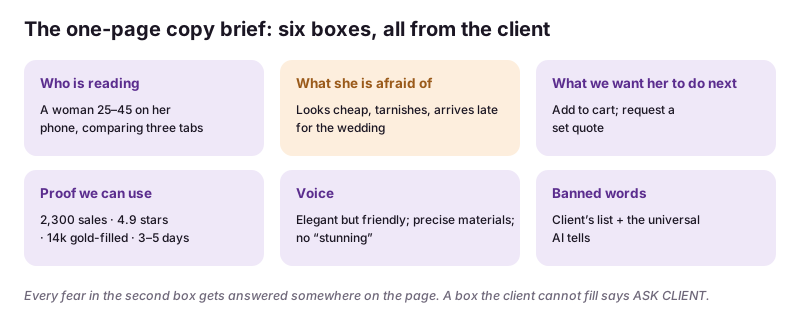 Six boxes, all from the client. The fear box is where the copy comes from.
The one-page brief
Before writing anything, fill six boxes with the client:
| Box | Example (Juniper & Gold) |
|---|---|
| Who is reading | A woman 25–45 buying for herself or a bridesmaid gift, on her phone, comparing three tabs |
| What she is afraid of | That it looks cheap in person, that it will tarnish, that it will arrive late for the wedding |
| What we want her to do next | Add to cart; for sets, request a custom quote |
| Proof we can use | 2,300 Etsy sales, 4.9 stars, 14k gold-filled, made to order in 3–5 days, free US shipping over $75 |
| Voice | Elegant but friendly, precise about materials, no “stunning,” “gorgeous,” “must-have” |
| Banned words | The client’s list plus the universal AI tells |
Every box comes from the client, in writing. The “afraid of” box is the one most clients have never thought about, and it is where the copy comes from: each fear gets answered somewhere on the page.
The three questions on a call
If you get ten minutes with the owner: Who is your best customer and how did she find you? What do people ask before they buy? What do you never want to sound like? That is the brief.
What you deliver, every time
A Google Doc with one heading per page or email, the copy in plain text, and a “Notes for you” box: what you assumed, where they need to add a photo, which claim they must confirm.
Worked example
Who is reading: a woman 25–45, on her phone, buying for herself or a bridesmaid gift, comparing three tabs. What she is afraid of: it looks cheap in person; it tarnishes or turns her skin green; it arrives late for the wedding; the set will not match. What we want her to do next: add to cart; for sets of 4–8, request a quote. Proof we can use: 2,300 Etsy sales, 4.9 stars, 14k gold-filled and freshwater pearl, made to order in 3–5 days, free US shipping over $75, 10% off sets. Voice: elegant but friendly; precise about materials; a small story behind a piece; never “stunning”, “gorgeous”, “must-have”. Banned words: the three above plus elevate, unlock, timeless, perfect.
Instructions you can copy (prompts)
Copy the instructions, replace the words inside {braces} with your details, and paste them into your AI tool. Check and edit the answer.
Here are my notes from a call with {owner} of {business}, a {type}. Fill a one-page copy brief with six boxes: Who is reading / What they are afraid of / What we want them to do next / Proof we can use (only facts in the notes) / Voice / Banned words. Where the notes do not say, write “ASK CLIENT” instead of guessing.

Notes:
{paste notes}
Fill the six-box brief for Juniper & Gold from the brand sheet (open it on the capstone step). Write the “afraid of” box yourself first, then compare with what the AI suggests. Paste your brief below.
Done when: A one-page brief where every box comes from the brand sheet and the “afraid of” box has at least three real fears.. Sign up to save your work to your account.
Quick knowledge check
3 questions, 60% passes. Checkpoints, the certification exam (three versions) and the reviewed final project are unlocked with a free account.
- Which sentence talks to the reader?
- Which brief box do most clients never think about, and where does the copy come from?
- A box the client cannot answer gets: